Parting Stone enforces patent protection



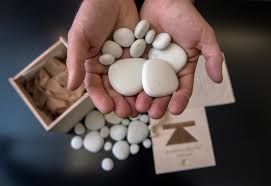
It’s just the way it works. If you are a company or other entity that seeks patents to protect your intellectual property you have to be able to fight off others who may want to capitalize on your documented efforts. It seems that Parting Stone, the solidified remains company found that out.
In a press release issued June 30, 2026, Parting Stone announced that they had “reached an amicable resolution of its intellectual property lawsuit against Remember Me Pebbles LLC.”
Parting Stone CEO Justin Crowe made these comments in the press release that you can read here, “We invented solidified remains, and we have spent years and resources protecting that invention with issued U.S. patents. We are glad to have resolved this matter. We will continue to protect the solidified remains category. Families and funeral professionals trust Parting Stone because of the quality and integrity behind the service and experience we provide, and we intend to defend that trust wherever our work is being copied.”
According to the press release, “Parting Stone actively monitors the solidified remains market and will continue to enforce its patents, trade dress, and other intellectual property rights against parties who copy its products or processes, whether they operate as established businesses or as individual sellers on online marketplaces.”
Disclaimer — The author of this article for Funeral Director Daily is a shareholder of Parting Stone.

Tom Anderson
Funeral Director Daily
Funeral Director Daily take: This isn’t the first patent defense that we have heard about at Funeral Director Daily. There have been several patent disputes that I’ve reported on since I started Funeral Director Daily. Here’s a report where Batesville prevailed in a patent dispute.
When I served on the Board of Regents of the University of Minnesota one of my responsibilities was as part of a 6-person group that monitored the patents and possible infringements of University intellectual property. As a public research university, with professors doing research for the good of the state, we filed and were granted patents, on average, once every three days.
Patent lawsuits were, at times complex, and at times marathon cases. One of the cases that I was involved in strategy-wise has now been resolved and is open to the public. It had to do with a patent held by the University of Minnesota that at least one professor at the University believed was being used by others.
The lawsuit was filed on November 5, 2014, which was six months prior to my board service. It was settled on May 21, 2025, which was four years after my six-year term had finished. According to this public report on the lawsuit it was active for 3,850 days. In essence, that legal case was active for over ten years before a negotiated settlement.
The public report of that case on PatSnap made these comments:
- “At 3,850 days, this litigation’s duration places it in the extreme tail of patent case timelines and likely reflects the complexity of LTE standard-essential patent questions, parallel IPR proceedings, and the involvement of major network equipment suppliers. The asymmetric dismissal terms — plaintiff’s claims gone with prejudice, defendants’ counterclaims only without prejudice — are a negotiated outcome that preserves optionality for Verizon and the intervenors while giving the University certainty. Financial terms of any resolution remain undisclosed on the public record.”
- “Agreeing to a with-prejudice dismissal of all five patent claims is a significant concession by the University. In practice, plaintiffs accept this term only when they receive something of value in return — typically a lump-sum payment, ongoing royalties, or a licensing arrangement. The public record is silent on financial terms, but the University’s decade-long pursuit of five patents suggests the settlement value was material.”
The President of the University also sat as an ex-officio member of what the University called the Litigation Committee. I remember talking to him about the length of the case and the deep pockets of the other litigant in the case. I also remember him telling me something like this, “We are not the opposition that they like to have. If we believe that we have a strong case we have the State of Minnesota and the purse of the taxpayers behind us to take as long as it takes to get our outcome.”
Serving on that Litigation Committee was a great learning experience for me and I really enjoyed the challenges and the complexity of the issues that we faced at times.
More news from the world of Death Care:
- Green end-of-life options are growing in popularity. Video and print articles. Ideastream Public Media (OH)
- Construction on second Alabama Veterans’ Cemetery to begin in October. Alabama Political Reporter (AL)
- Belmont’s cemetery data moves into the 21st Century. The Belmont Voice (MA)
- Decisions worth making early: It may seem absurd, but this is what AI roleplay and Texas cremation planning have in common. . . We Heart Magazine
Enter your e-mail below to join the 3,482 others who receive Funeral Director Daily articles daily
“A servant’s attitude guided by Christ leads to a significant life”