This might give a new meaning to “Permanent Memorialization”



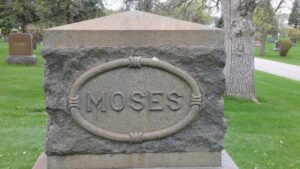
An interesting monument in my hometown cemetery
I’m a big fan of “permanent memorialization” for the simple fact that that memorialization of that type continues to give creedence to a “life that was lived”. I’ve seen the graves and permanent memorialization sites of President John F. Kennedy in Arlington National Cemetery, Paul Revere in the Granary Burying Ground of Boston, President George Washington at Mt. Vernon. I’ve even seen the tomb of the 13th Apostle, Matthias, in Trier Germany .
Seeing the graves, and the permanent memorialization in place, gave me the realization that these “lives were lived”. They were not just stories that I read about in a book — the lives had been lived and memorialized for future generations to understand that.
You can see those graves from “Find a Grave” below:
I’ve also seen in my little home town cemetery the graves of Civil War soldiers, including one memorialized as a Medal of Honor winner, and the grave of Knute Nelson, a member of our community who served as Minnesota Governor and United States Senator. Seeing those graves made those people “real” to me also.
However, Great Britain’s Law Commission has now made recommendations and “proposed that graves that are more than 100 years old could be reused across England and Wales to tackle dwindling burial space”.
The Law Commission’s report gives new thoughts to rules about cemeteries that have been largely untouched for the past 170 years. The commission was to “. . .address a growing shortage of burial space whilst ensuring robust safeguards for grieving families”.
A statement from Lisa Webley, Commissioner for Property, Family, and Trust Law, makes this statement about the Commission:
“Our proposals would modernise and simplify burial and cremation law in England and Wales, and provide clearer, more consistent safeguards for bereaved families and friends. Our recommendations respond directly to contemporary challenges, including the shortage of burial space, the complexities created by Victorian-era legislation, and the need to recognise the diverse religious and cultural practices in modern Britain.”
To learn more about the Law Commission and see more of their suggestions click here.
Related Article — St. Wilfrid’s Chapel Cemetery in Selsey runs “out of space”. The Argus (Great Britain)

Tom Anderson
Funeral Director Daily
Funeral Director Daily take: While I’m a fan of permanent memorialization, it appears to me that many contemporary consumers don’t have my opinion on the subject. Or, they just have different ways to express their idea of memorialization — which may not be in a “permanent” fashion.
Each of us has a preferred way of expressing our memorialization of our loved one. However, it does appear that “permanent” memorialization may no longer have the place that it once did. And, maybe that is okay — would we be interested in looking at monuments of those who lived in the 3rd, 4th, or 5th century if we did not know their names from history?
While I’ve been an advocate for burial and memorialization of bodies and cremated remains for posterity’s sake, there is also an argument about “how long is permanent”? The “Law Commission” certainly believes it is not “forever”.
More news from the world of Death Care:
- Entrepreneurs take on the funeral monopoly: When selling a box becomes a crime. The Daily Economy – American Institute for Economic Research
- Federal judge stops Carlton County church from doing natural burials. Fox 21 – KQDS – Duluth (MN)
- Luzerne County mausoleum investigated in grave thefts linked to Jonathan Gerlach case. Video news story and print article. WGAL TV – Lancaster (PA)
- Opinion: Direct cremation not just a trend – it’s a response to changing needs. Newsby Wire (Great Britain)
Enter your e-mail below to join the 3,201 others who receive Funeral Director Daily articles daily
“A servant’s attitude guided by Christ leads to a significant life”