
Does Natural Organic Reduction (NOR) face religious headwinds?



From 2015 to 2021 I served on the University of Minnesota Board of Regents. That 12-person governing board for the State of Minnesota got to know each other very well. One of the people I served with, and sat right next to at board meetings for four years, was the Minnesota legislature’s former Speaker of the House, Steve Sviggum.
It was also at that time that Natural Organic Reduction (NOR) or “Human Composting” was coming into view and reality as a form of human disposition. As a matter of fact, Recompose, the first NOR commercial enterprise opened in the Seattle suburbs in 2020.
Mr. Sviggum, a pretty conservative fellow, used to tease me about our funeral home becoming a human composting facility. Quite frankly, I think he believed and felt that “human composting” was a long way off in reality and could not see it ever becoming a viable business alternative. Well, the Minnesota legislature has now made NOR a legal way of human disposition beginning back in July of 2025.
However,on the heels of New York City’s Green-Wood Cemetery announcing, a couple of weeks ago, that beginning in 2027 that they will offer the service to consumers I noticed an article from CBS News tha shows some headwinds for the disposition method that are becoming apparent.
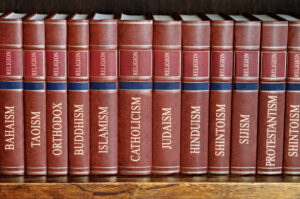
This article from CBS News mentions some of those headwinds that NOR may face in the form of religious oppossition. Here’s an exerpt from that article that pertains to Jewish, Muslim, and Catholic concerns:
“The Catholic Church opposes human composting because we believe the remains of human beings who are made in the image and likeness of God should not be treated like manure or fertilizer,” said Trent Horn, a staff apologist with Catholic Answers.
Rabbi Andrew Schultz, executive director of the Community Alliance for Jewish Affiliated Cemeteries, said this option does not align with Jewish burial traditions, though many secular Jews inquire about alternate practices.
“While composting seems to be natural, it doesn’t provide what we call in Hebrew the Kavod Hamet, the respect and dignity of a person who’s passed away, that someone should be returned to the earth, someone should have an appropriate grave marker,” Schultz said.
“At the heart of our democracy, we have pluralism, and that’s a value that we cherish as Muslims,” says Ibad Wali, vice president of the New York branch of The Council on American-Islamic Relations. “Having said that, we as Muslims practice burial, wherein the decomposition of the human body should take place six feet under.”
So, with at least some opposition from those groups, where does that leave Natural Organic Reduction with an addressable market?
I looked up some recent statistics and came up with the following percent of the American population for those groups:
- Roman Catholic – 21.8%
- Jewish – 1.8%
- Muslim – 1.3%
Those numbers give us a total of 23.6% that seemingly belong to a religious affiliation that seems, for one reason or another, to oppose NOR. There is approximately 343 million Americans where 23.6% would equal 81 million leaving a “religious non-opposed” 76.4% of the population or about 262 million people in that category.
A market of 262 million is certainly large enough to foster the business of Natural Organic Reduction. And, a religious hierarchy of opposition does not necessarily equate to an individual’s decision, potentially making that addressable market even larger.
On an Annual Basis-— Let’s just suggest that the addressable market of deaths in America per year is 3 million. . .which it is more or less. Taking 76.4% of that number would equal roughly 2.3 million American deaths annually without a religious opposition to NOR.
What percentage of deaths can NOR expect to receive as a disposition of all deaths in America within the next 10 years. The process will be competing with flame cremation, traditional burial, green burial, and alkaline hydrolysis. Can NOR become 3% of all deaths within a decade? If they do, that would give the NOR process businesses a total of 68,000 deaths annually.
Depending on the density of NOR businesses, that certainly, in my opinion, would seem to be enough deaths that choose the process to build a sustainable business model.
Time will tell. . . . but always fun to run the numbers!!
Related — Recompose, the Seattle area’s Natural Organic Reduction funeral home named the Pacific Northwest’s Best Funeral Home in 2023, 2024, and 2025.
More news from the world of Death Care:
- A traumatic experience at 13 years old inspired a lifelong passion for Danielle. Nine.com (Australia)
- EEOC sues employer for barring Black workers from restrooms, firing supervisor. Human Resource Director
- Funeral home and crematory starts new “Legacy” in Raeford. The News-Journal (NC)
- Website of Legacy Funeral Home & Crematory in Raeford, NC.
Enter your e-mail below to join the 3,201 others who receive Funeral Director Daily articles daily
“A servant’s attitude guided by Christ leads to a significant life”




4 Comments
Leave a Comment








Tom, the Catholic Church also went against cremation, but as soon as they could profit from it, they changed their minds; the same will happen here. And if they are ok with “human beings who are made in the image and likeness of God” being reduced in a fire chamber (not unlike depictions they provide as to hell), then why would a gentle process like composting give issue….it is certainly not God making these rules. Also, the human body in natural burial form also acts as fertiliser for the grounds it inhabits, does it not?
There is a big hole (pun intended) with your assumption that approximately 3/4 are “religiously unopposed”. There is an infinite number of possible other religions outside of Catholic, Jewish and Muslim who may be religiously opposed to human composting. To get an accurate number, you would have to explore every religion possibility outside of those 3 religions, determine if each religion was opposed, and then add those who were to the “religiously opposed” total, and subtract from 100% to get the percentage who would be “religiously unopposed”.
As usual, Tom, you hit the nail on the head with the math. And I would certainly agree that there is a large enough base of potential consumers for NOR to succeed over time. The immediate thought that popped into my head was that a lot of Catholic, Jewish, or Muslim consumers might still choose NOR in spite of the guidance of their hierarchies and the official beliefs of the faith. Many believers within these 3 faiths routinely reject official teachings on things like pre-marital activity, birth control, fasting, alcohol consumption, service attendance, etc. So, I think the market may be a bit bigger there. And on the flip side, many Christian, Non-Catholics would surely not choose NOR for whatever reasons known only to them. Traditions are always changing, and consumers are often surprising us with their choices and decisions about their final dispositions!
This is another fantastic article by Funeral Director Daily that brings us objective perspectives. Has there been any documented research by religious authorities on their experiences that led them to believe NOR has similar effects of treating a human being as “manure,” for example? In my mind, until actual collaboration and education can exist BOTH WAYS between deathcare professionals and religious institutions where facts and transparency can be revealed, it can be dangerous for consumers to know what to believe. In what ways can the deathcare industry step up to promote collaboration and transparency in helping consumers understand their final disposition options AND the deeper “whys” behind religious traditions? Food for thought.
Keep up the great work, Tom!