
University set to re-open anatomy labs after being closed for formaldehyde exposure levels



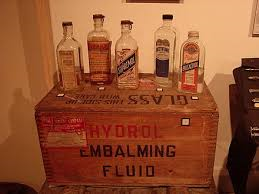
I was aware as you can read here, that in 2025 the United States Environmental Association (EPA) published the findings of their Risk Evaluation of Formaldehyde. After years of evaluation and input the EPA ruled “that the use of formaldehyde for embalming is exempt from regulations under the Toxic Substance Control Act (TSCA)”.
That ruling came as a big relief to funeral homes and embalming supply companies. According to the National Funeral Directors Association the EPA still needs “to develop draft Management Controls to address formaldehyde risks. These controls will be subject to public review and comment before finalization”.
NFDA made that statement in early 2025 and also mentioned that because of the new Presidential administration coming into office at the time (the Trump administration), it may be some time before the EPA makes that move. To my knowledge, the new administration has not moved forward with developing those controls as of this time period.
So, it was interesting when I saw the recent headline about a university that had its anatomy lab shut down for high levels of formaldehyde because of repeated air quality tests. However, it was at a Canadian university, Dalhousie University located in Halifax, Nova Scotia, with additional labs located in Cape Breton and St. John.
The February 2026 article, which you can access here, from the Canadian Broadcasting Corporation (CBC) actually states that the lab, and those shut down in Cape Breton and St. John, for precautionary reasons, will re-open for the Fall 2026 semester.
Doing a little research I found an article from October 2025, that you can access here, that announced the closing of the anatomy labs at the medical school campuses of Dalhousie University in Halifax, Cape Breton, and St. John. Here’s some quotes from that article:
- “In a lengthy letter to students, the dean of the faculty of medicine said the anatomy lab in the Tupper Building was tested over the summer and results showed that formaldehyde levels no longer meet provincial standards.”
- “The school attempted to fix the problem through changes to the ventilation system, but it failed a second round of tests.”
- “In his letter to students, (Dalhousie Univeristy official) Dr. David Anderson said that Nova Scotia follows a threshold set by the American Conference of Governmental Industrial Hygienists.”
- “This was the first time formaldehyde was tested in a decade. When the tests were done this summer, Dalhousie discovered that Nova Scotia had lowered the acceptable level in 2017.”
- “Although our test results are no longer compliant within Nova Scotia, our current testing levels at the Tupper Building laboratory are compliant with the previous allowable thresholds in Nova Scotia and the current allowable thresholds in New Brunswick.”
Solving the problem — According to the second article that mentions that the school has now passed the monitoring and will re-open in the Fall, it also mentions that the problem was solved, in part, by “trying new techniques to embalm cadavers using lower levels of formaldehyde”.
The article goes on to say that “Air quality testing has been completed using these newly embalmed specimens, and the results met long-term exposure guidelines.” The article also states that the problem seems to have been rectified by that embalming decision and by “. . .making changes to the ventilation system by installing four dissection tables that are designed to draw air downward, away from students and instructors.”

Tom Anderson
Funeral Director Daily
Funeral Director Daily take: I think that this is an interesting article simply for the fact that when facing adversity you may find more than one way to defeat the problem. In this case, most people would think about the mechanical re-design of the preparation room, but it appears that the people at Dalhousie University also looked at the “embalming process” to see if there was something they could do to lower formaldehyde exposure during the process.
While this article has a “Death Care” component to it, I think the big take-a-way from the article is about the importance of “creatively” solving problems. The situation is a great reminder to look at all possible solutions when faced with adversity. . . . . and that pertains to not only business issues but life issues as well.
More news from the world of Death Care:
- The most eco-friendly burial option isn’t cremation or human composting. Popular Science
- California’s parks use of human compost draws outcry. The Mercury-News (CA)
- Hastings’based funeral director calls for higher sustainability standards across the industry. Sussex World (Great Britain)
- Tiny clump of moss helped solve a shocking cemetery crime. Science Daily
- Fitch affirms and withdraws Matthews International’s ratings. Fitch Ratings
Enter your e-mail below to join the 3,201 others who receive Funeral Director Daily articles daily
“A servant’s attitude guided by Christ leads to a significant life”




1 Comment
Leave a Comment












When we built our new facility in 2019, our HVAC contractor built our prep room as a negative pressure
room based on NFDA info and HVAC national standards. We used old fashioned plumbing and spent our money on the air control system. Best thing we could have done. It’s not pretty but works incredibly well.