Health Savings Accounts (HSA) seem to becoming more popular for a variety of reasons



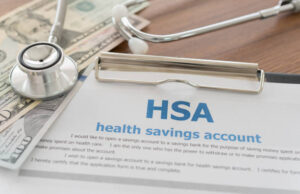
It’s been over 20 years since the advent of Health Savings Accounts were swept into law during the George W. Bush administration. And, a bill (HR 2436) which moves them into the Death Care realm, which still sits in committee, was introduced into the U.S. Congress in 2025. That bill, introduced by Oklahoma Representative Kevin Hern, would allow HSA accounts to pay up to $5,000 of a consumer’s Death Care bill tax-free from one’s HSA savings account.
That bill seems like a good idea and has been endorsed by the National Funeral Directors Association. What seems like a great idea and benefit to U.S. citizens seems to also highlight the “Roadblock” which is Washington, DC.
I was reminded of Congressman Hern’s bill when I saw this article from Yahoo Finance last week titled “Employers are auto-enrolling workers in HSAs — just like 401(k)s”.
The article points out that many employers are using benefits such as Health Savings Accounts (HSA) in order to hire and retain the best employees available in a tight labor market – such as funeral homes may be in.
The article also pointed out some of the advantages of growing HSA accounts which were not so visible to the general public back when the accounts were created. Most people know this about HSAs as explained in the article: “The allure of an HSA is its triple tax advantage. You put money in on a tax-free basis, it builds up tax-free, and comes out tax-free for qualified healthcare expenses.”
Another advantage for many employees is that the original money put into an account can come from the employer — thus costing the employee zero.
Finally, if you are blessed with good health and do not need to spend the money in an HSA on your health care during your working years, one can invest the money and build a nest-egg for their retirement years and use the funds to pay for certain health care premiums once you become eligble for Medicare.
Here’s what the Yahoo Finance article says about that situation, “. . . the number of accounts holding $10,000 or more has soared over the past decade, from roughly 599,000 at the end of 2015 to 4.1 million at the end of 2025, according to Devenir, and 1.7 million accounts held more than $25,000.
Here’s another quote from the article on that same thought wave:
“While it’s still a fraction of HSA holders who invest, it’s growing. There’s growing awareness of the healthcare costs people may face in retirement and the role an HSA can play in preparing for those costs. . .
Holding on to your money for the future takes a mindset shift. The mind shift occurs when you’ve had this account for a few years. Suddenly you have a year where things were okay healthwise, and you didn’t spend as much money; you’ve now built up a balance and begin to think of them as a long-term retirement savings vehicle and not just an account with a debit card that you use to buy sunscreen.”

Tom Anderson
Funeral Director Daily
Funeral Director Daily take: While the numbers may change with your age, maximum contribution to a HSA in 2027 will be $4,500 per person and $9,000 per couple. The contributions are also tax-deductible.
While everyone’s specific needs have to be taken into consideration, at that amount of contributions you can see how fast your money can be turned into quite an investment account over a period of a few years.
There are some unique tax disadvantages to having a great deal of money in a HSA at the death of the second person in the marriage. The balance must be taxed at the ordinary income rates prior to the balance becoming part of the estate.
However, there are some ways that a balance might be able to be used in beneficial ways without a tax. For instance, my wife and I have thought about leaving any balance we might have in a HSA to a local charity upon death. A bona-fide charity or church can receive the total amount without paying a tax and the HSA balances would not be part of an estate which may be taxed in some states, such as our home state of Minnesota.
In any regard, now that I’ve reached Medicare age and can no longer contribute to a HSA I’ve learned that the account presents many options moving forward as an investment with the back-stop that the money is still available to be used for medical purposes if needed while I make decisions for the future.
And, any employer who can offer HSAs to employees, and even better fund portions of them, should find employees who are happy for that benefit.
More news from the world of Death Care:
- Green burials are a natural alternative to traditional funerals. Springfield News-Sun (OH)
- Funeral Consumer Alliance releases pricing report. Athol Daily News (MA)
- Sacramento school board votes to oppose crematorium near school. Video news story and print article. KCRA Channel 3 – Sacramento (CA)
- Indiana is home to thousands of abandoned cemeteries. Who’s responsible? Ink Free News (IN)
- “It’s kind of cosy”: Meet the Nova Scotian weaving together a more sustainable burial. CBC News – Canada
Enter your e-mail below to join the 3,482 others who receive Funeral Director Daily articles daily
“A servant’s attitude guided by Christ leads to a significant life”