Opinion: The Jewish Faith and Cremation



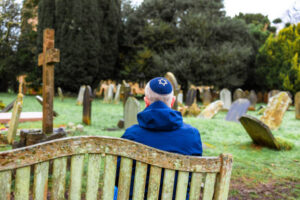
I grew up in the very homogeneous community of Alexandria, Minnesota. From this Wikipedia article you can see that the city at the time of my growing up had a population of a little over 6,000. Today, according to the same Wikipedia article the community’s “metropolitan area” – those that live, work, and/or attend school in the area is about 39,000.
The community was first settled in 1858 by immigrants, mostly from the Nordic European countries. My father’s side of the family arrived in 1872 from Sweden and my mother’s side arrived a few years later from Norway. Almost all of the settlers in those days were of the Christian faith — either of Roman Catholic or Lutheran backgrounds.
I tell you those details simply to point out that I am probably not well-versed enough on Jewish customs to comment, other than to say that there may be a lot Death Care professionals can learn, about the article that follows. I read the following opinion article (that you can access in its entirety here) that appeared in “The Times of Israel” publication. I found it a fascinating read on one Jewish author’s perspective on their traditions, the fact that Jews are (in the author’s opinion) turning to cremation, and where Jewish values may lead them in the future.
The following are some paragraphical quotes from the article that is titled “Cremation: It isn’t just about money“. There is more to the article that you can access in the link above, but these paragraphs will give you a good idea on what one Jewish author is wrestling with as to Jewish Death Care customs.
“When people say they’re choosing cremation because it’s cheaper, they’re not wrong. Traditional burials can easily cost upward of $25,000 once cemetery plots, coffins, vaults, and services are included. Cremation, by comparison, averages closer to $2,000. The math speaks for itself.
But money isn’t the whole story.
In my experience, cost is only part of the decision. Many families I meet have other reasons—deeper, more existential ones. They tell me they don’t want to “take up space.” They say no one visits graves anymore, and they don’t expect their children to visit theirs. They want to be part of the earth again—not sealed away in boxes within boxes. . . . . .
When Jewish leaders respond to cremation, the conversation too often stops at what Judaism forbids. We repeat that cremation is not part of Jewish tradition, that it desecrates the body, that it stirs memories of the Holocaust, and that it pollutes the air. All of that is true—and yet, by focusing solely on prohibition, we may be missing the deeper question of why so many Jews are turning to it in the first place.
The truth is, cremation is no longer a fringe practice. More than half of Americans now choose it, and its acceptance is steadily growing in the Jewish community as well. Cultural taboos fade with each generation. For many liberal Jews, the visceral associations with the Holocaust no longer carry the same weight. Meanwhile, new cultural values—environmental awareness, simplicity, and freedom from institutional control—are taking their place.. . . . .
Many who choose cremation are doing so because, to them, the conventional cemetery feels lifeless—acres of manicured grass, sealed vaults, pesticide-soaked soil, and heavy coffins. It feels industrial rather than sacred. When faced with that landscape, cremation can seem like the more ecological, even spiritual, option. . . . .
The real problem is not people’s desire for cremation; it’s that the alternatives haven’t been compelling enough. If our cemeteries were places of life—where bodies return gently to the soil, where trees grow instead of headstones, where wildflowers bloom over graves—then perhaps fewer people would feel drawn to cremation as their final act. . . .
For centuries, Jewish burial practices reflected their times and places. Abraham was buried in a cave, Jacob embalmed, Joseph carried in a coffin from Egypt, Moses buried in an unmarked grave. There was never one unchanging “traditional” form. The essence was always dignity, simplicity, and the acknowledgment that death is part of creation’s fabric.
We now live in a time of flux—religious, cultural, ecological. Our communities are shrinking, our cemeteries filling, our climate warming. If we answer the rise in cremation only with moral disapproval, we will lose both the argument and the opportunity. But if we respond with imagination—if we can offer ways of dying that honor both the soul and the soil—we can reclaim something profoundly Jewish.
There is deep wisdom in our tradition’s insistence on burial: to face the earth one last time, to let the body become part of the renewal of life. When done simply and sustainably, burial is not wasteful—it is generous. It gives back to the earth that has sustained us.
So yes, cremation is cheaper. But that’s not all it’s about. The rise of cremation is a symptom of a deeper spiritual hunger—a longing to live and die in harmony with the planet. Rather than fighting that impulse, we should honor it and guide it.
Green burials, conservation cemeteries, aquamation, terramation—these are not departures from Jewish values. They are, in many ways, paths to their fulfillment.”
In the end, the question isn’t whether we can afford to be buried. The question is whether we can afford not to return to the earth from which we came.
More news from the world of Death Care:
- Neenah funeral home plans to add crematory to its downtown facilities. Post Crescent (WI)
- Grave Matters — How to rest in peace without wrecking the planet. The Durango Telegraph (CO)
- Funerals at Washington’s National Cathedral tell the story of a nation. WKYC – NBC – Cleveland (OH)
- I grew up in a funeral home. There was one experience I’ll never forget. Newsweek
Enter your e-mail below to join the 3,201 others who receive Funeral Director Daily articles daily
“A servant’s attitude guided by Christ leads to a significant life”